

Winter Holidays in Crete: A Different Kind of Escape at Keras Cliff House
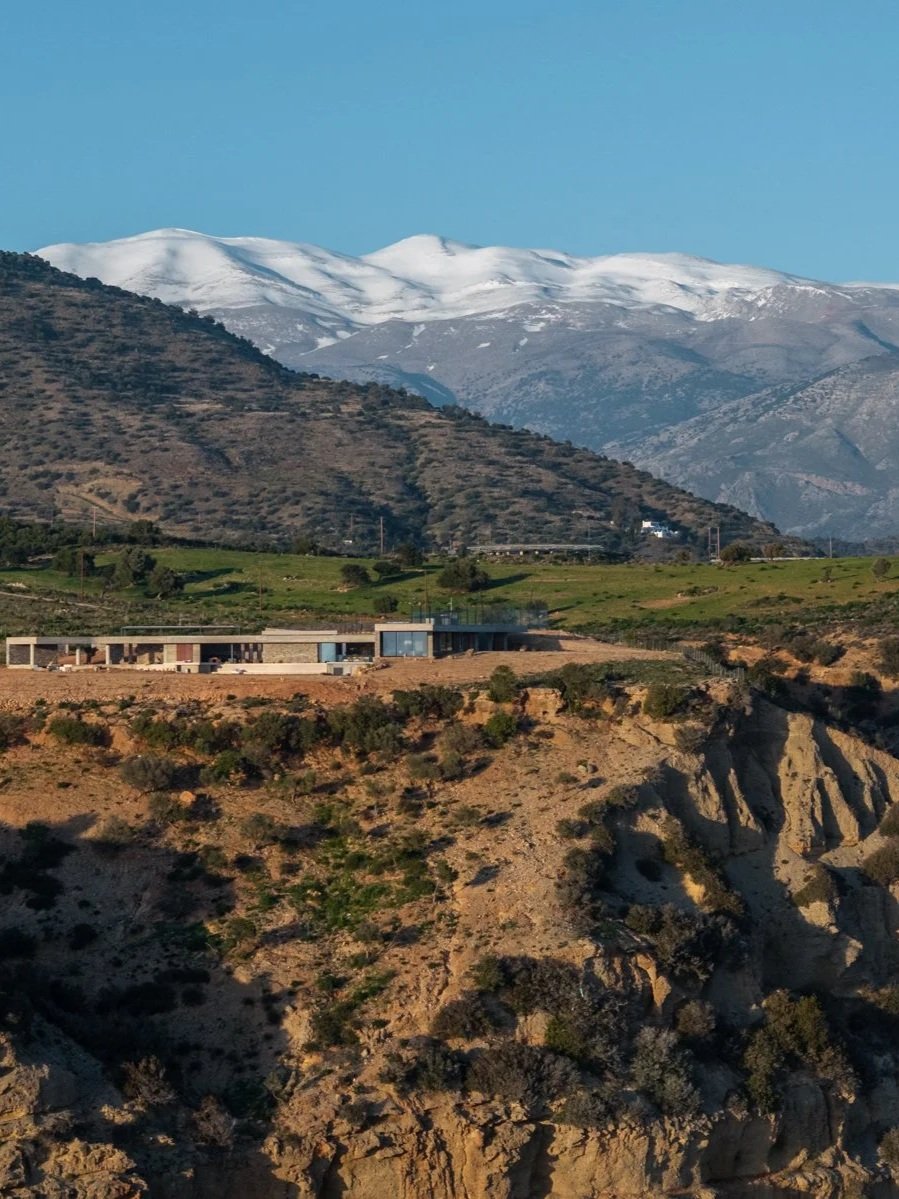
There is a version of Crete that even its most devoted visitors rarely encounter. Not because it requires effort to find, but because the rhythms of work and school and the logic of summer holidays conspire to keep most people away between November and March. Those who do come in winter tend to become quietly evangelical about it — the kind of travellers who come in July and find themselves thinking, unprompted, about what this same view looked like in January.
Winter at Keras Cliff House begins with the light. It arrives differently in December and January — lower in the sky, longer in its shadows, the kind of golden lateral light that photographers spend entire summers chasing and find arriving naturally every afternoon in the off-season. The Libyan Sea does not lose its colour. The south coast faces Africa, and the southern exposure means Keras receives more winter sun than almost anywhere else on the island. On a clear January morning, standing on the terrace with coffee, the horizon is still that particular shade of blue that people in northern Europe spend the entire year trying to remember. Also, the sun finally sets behind the sea and the dark blue line of the horizon again, not behind the silhouette of the mountains.
The temperature, honestly described, runs between 18 and 22 degrees during the day. It is not swimming weather in the conventional sense. It is, however, walking weather, reading weather, long-lunch-at-a-taverna-that-isn't-crowded weather. And it is the weather for everything that Keras now offers that summer guests, paradoxically, rarely use to their full capacity — because in summer, the pool is enough. In winter, the pool, the sauna, and the hammam become the entire point.
The case for warmth on your own terms
Keras Cliff House is equipped with a heating system, a heated pool, a heated jacuzzi, a sauna, and a hammam. In July, these are amenities. In January, they become the architecture of the day.
The rhythm of a winter stay at Keras organises itself naturally around them. A morning walk along the cliffs or to the bakery in Agia Galini. Return to the hammam's steam, which does something to the body after an hour of coastal air that no spa appointment in a city can replicate — partly because of the heat itself, partly because of the silence, partly because of what you can see through the window. A long lunch, eaten slowly, somewhere in Agia Galini where the same taverna owner who was overwhelmed in August is now happy to talk. An afternoon in the heated pool as the winter light goes warm and horizontal across the water. The sauna as the evening cools. Dinner by the fire.
The grounds at Keras extend the options further. A padel court sits within the property — a game that rewards the kind of unhurried competitive engagement that a winter week together, without external commitments, naturally produces. The calisthenics park offers something different: a return to movement in its most fundamental form, outdoors, above the sea, in the kind of air that makes physical effort feel less like discipline and more like instinct. Neither requires booking, neither requires equipment, and both feel considerably better in the mild clarity of a January morning than in the heat of August.
This is not a programme. It is simply what the days become when you remove the obligations that fill them at home and replace them with a house above the sea, warmth on demand, and nowhere to be.
What Crete looks like when the tourists have gone
The island in winter is the island as it actually is. The roads are navigable. The archaeological sites are yours — Knossos, Phaistos, Gortyna, the sites of ancient Minoan civilisation that you share with a hundred other visitors in August and with almost nobody in January. The Heraklion Archaeological Museum, one of the finest in the world, becomes a place you can spend three hours in without being moved along. The Phaistos Disc sits in its case and you can stand in front of it for as long as you like.
The hiking trails come alive. The E4 coastal path, the gorges, the mountain trails above Spili and through the Amari Valley — all of them are better walked in cool air than in the summer heat, and all of them empty in winter of the structured tour groups that populate them in high season. The landscape is greener than most visitors ever see it. The first wildflowers appear in January. By February the hills above the south coast are dotted with colour, and the almond trees, which are among the first to blossom in the Mediterranean year, are already white.
On clear winter days, which are more frequent on the south coast than the season's reputation suggests, Psiloritis is visible from Keras — the island's highest peak, snow-capped from December onward, rising above the plain of Messara to the north. It is the kind of view that recalibrates your sense of the island's scale: the same terrace that looks out over Africa in summer looks out over a snow-covered mountain in winter, and both are true at once.
Rethymno in winter is one of the most quietly beautiful towns in Greece. The Venetian harbour without crowds, the old town's alleyways in the early evening — these are experiences that summer visitors read about and autumn visitors find. In February and early March, the Rethymno Carnival fills the old town with one of the largest such events in Greece — twelve thousand participants, elaborate handmade floats, and a festive atmosphere that belongs entirely to the island rather than to tourism.
The tavernas that remain open in winter are, almost without exception, the ones worth going to. The seasonal places, the ones that opened for the summer crowd and closed again in September, are not there. What remains are the family kitchens, the places where the owner cooks what came in that morning, where the wine is local and the bread is made on the premises. Winter in Crete is, among other things, an education in what Cretan food actually tastes like when it is cooked for people who live there rather than for people passing through.
Who a winter stay is for
The guests who suit Keras in winter are not those seeking the beach holiday that Crete delivers in summer. They are seeking something more deliberate — a couple who wants to actually be together without the social obligations of summer, without the noise, without the next thing on the schedule. Remote workers who have discovered that a month in a heated clifftop villa with fast internet and a sauna produces a different quality of work than an open-plan office in January. Travellers who know Crete in summer and want to understand what they have been missing. People who are, in the bluntest terms, tired, and who know that what they need is not a beach club but a house above the sea, a hammam, and a week of doing very little exceptionally well.
The property has also become a natural home for small retreats. The combination of privacy, space, and an environment that is actively conducive to focus makes Keras an unusual venue for groups who want to work together in a different setting — writing retreats, yoga weekends, creative workshops, professional offsites that have no interest in a conference room. The clifftop setting does something to the quality of attention that is difficult to manufacture elsewhere: the absence of distraction is total, the light is extraordinary, and the silence between sessions is the kind that restores rather than unsettles. Winter, with its longer evenings and quieter island, suits this use of the house particularly well.
Keras Cliff House does not become a different place in winter. It becomes a quieter, more concentrated version of the same place — the same view, the same architecture, the same quality of light on the water, with the crowds gone and the season stripped back to what it actually is. Which is considerable.
A practical note
Heraklion Airport operates year-round. The drive to Keras takes approximately ninety minutes from the airport. South Crete's roads are quiet in winter and the drive itself — through the mountains and down to the coast — is one of the more spectacular arrivals on the island.
Keras Cliff House is available for winter bookings from October through March. For enquiries and availability, please check the booking calendar on this website or contact us directly — we are glad to help plan a stay that makes the most of the season.